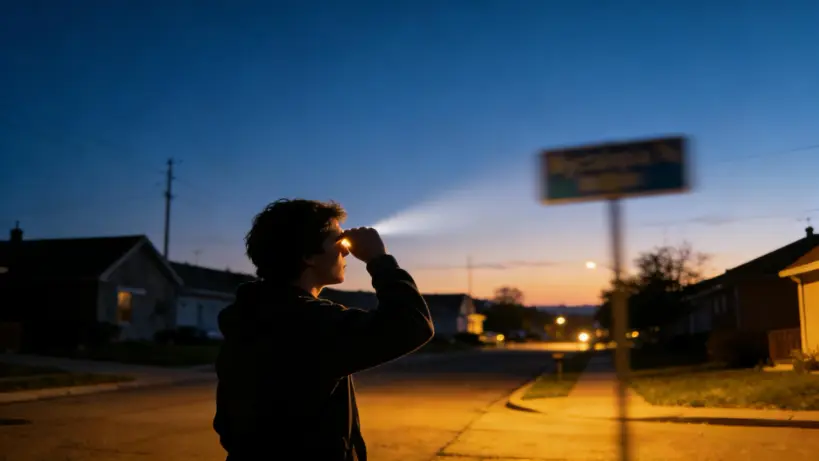
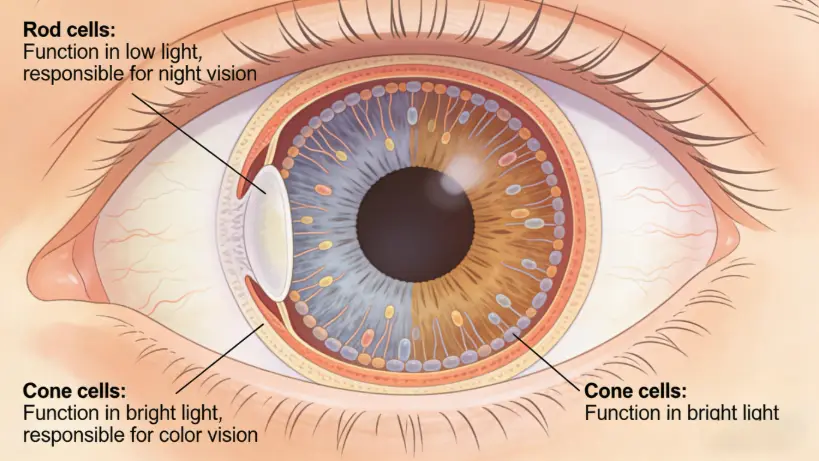
Struggling to see road signs at dusk or blurry vision in dim light could be signs of nyctalopia, or night blindness. It is not an independent disease, but a symptom where the rod cells in the retina malfunction and fail to produce rhodopsin, the pigment that captures faint light, leading to difficulty adapting to low light. This issue also significantly impacts visual health among people in the United States.
Causes
Nyctalopia is mainly caused by age-related issues and genetic factors. Over 24 million Americans aged 40 and above suffer from cataracts, where cloudy eye lenses scatter light. Diabetic retinopathy also damages retinal blood vessels, both of which impair low-light vision. Hereditary retinitis pigmentosa affects 1 in 3,500 to 4,000 Americans; it first damages rod cells, progressing from night blindness to tunnel vision over time.
Diagnosis and Treatment
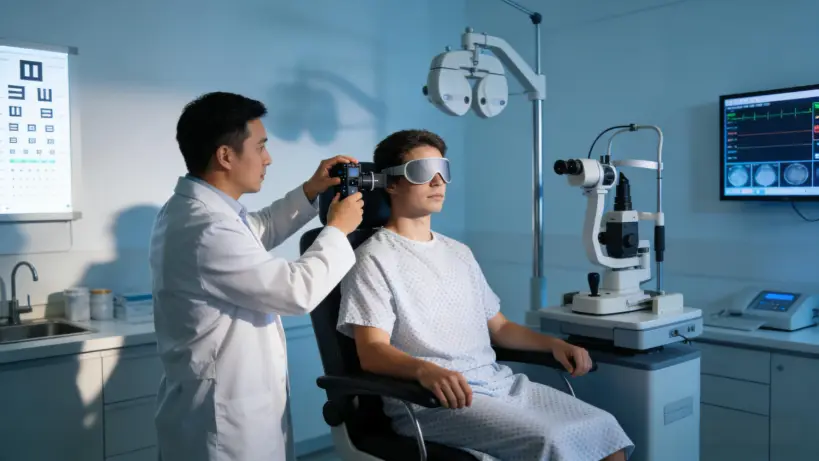
The underlying cause can be identified through eye examinations. Dark adaptation tests measure how long the eyes take to adjust to dim light, and electroretinography assesses retinal cell function, while genetic testing confirms retinitis pigmentosa. Treatments are targeted at the root cause: cataract surgery replaces cloudy lenses with artificial ones to restore night vision, and regular eye exams can detect and intervene in related issues in a timely manner.
Impact and Current Status in the U.S.
Nyctalopia robs older Americans of the ability to drive at night, and patients with retinitis pigmentosa experience progressive vision loss in adulthood, severely compromising their independence. However, ongoing research in this field is advancing, and new therapies bring hope for recovery. Early eye examinations allow for intervention before the condition worsens, offering nyctalopia patients the prospect of overcoming the barriers of darkness.
Leave a Reply